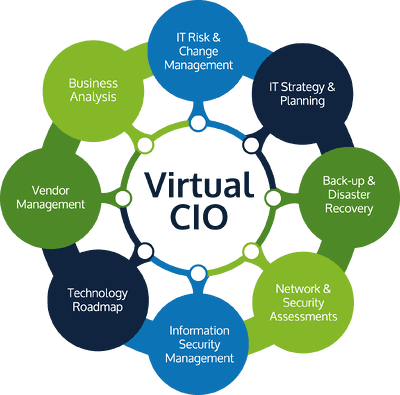
Technology has become a business imperative for growth, efficiency, cybersecurity, and differentiation. Yet many SMBs have no senior technology leader, relying instead on an MSP, a one-person IT shop, and a patchwork quilt of vendors. What they're missing is strategic leadership.
The CIO links business strategy to technology spend, communicates with key stakeholders, performs risk analysis, and drives execution that ensures technology objectives are advancing revenue and business scale. SMBs need this, but most don't have the budget to hire a full-time Chief Information Officer.
This is where the Fractional CIO (or vCIO) model delivers outsized value. A fractional CIO brings executive-level guidance on a part-time basis, providing the strategy, governance, and accountability that most growing organizations lack. Instead of reacting to IT problems, leaders gain a clear roadmap, prioritized initiatives, and measurable outcomes.
Why SMBs Need a CIO
SMBs face many of the same pressures as large enterprises:
- Rising cybersecurity threats and compliance obligations
- Rapid cloud and AI adoption
- The need for data-driven decisions over guesswork
- Tight budgets that require ROI on every technology dollar
A CIO ensures technology spending maps to business goals and that the organization is executing the right projects at the right time. With clear governance and KPIs, teams stop chasing tools and start delivering outcomes.
Why a Fractional CIO Makes Even More Sense
A full-time CIO can be cost-prohibitive. A Fractional CIO provides seasoned leadership at a fraction of the cost, with flexibility to scale engagement up or down as needs change. Core benefits include:
- IT strategy and roadmap development aligned to revenue and risk
- Cybersecurity and risk management oversight
- Budgeting and vendor accountability, including MSP performance
- AI readiness and adoption planning
- Change management to ensure initiatives land successfully
In short, you get the leadership you need, without the overhead.
Fractional CIO vs. MSP: Different Roles, Different Outcomes
Many organizations assume their MSP fills the CIO role. They don't. The MSP executes. The CIO leads. When strategy and execution sit with the same vendor, incentives blur and accountability weakens. With an independent Fractional CIO, strategy remains objective, vendor-agnostic, and focused on business outcomes.
Future-Ready Companies Will Outpace Their Competitors
Organizations that invest in strategic IT leadership gain agility, scalability, and resilience. As AI, data analytics, and cloud capabilities accelerate, the gap widens between companies with a technology leader at the table and those without. In the modern marketplace, falling behind in technology means falling behind in business.
Conclusion
SMBs deserve more than reactive IT support. They deserve leadership. A Fractional CIO provides strategic direction, accountability, and the ability to innovate, at a cost that makes sense for growing companies.
The CIO leads. The MSP executes. The business wins.
Not sure where your IT really stands? Start with a Clarity Audit: a focused assessment of your backups, security, vendors, and AI readiness. It’s the first step in every engagement I take on.
About the author: Chris McGlasson is a fractional CIO and the founder of ClearStack Advisory, where he helps mid-market companies build AI governance, IT strategy, and technology roadmaps without the overhead of a full-time CIO. He previously built and sold LANPRO Systems, an IT services firm serving 350+ enterprise clients.